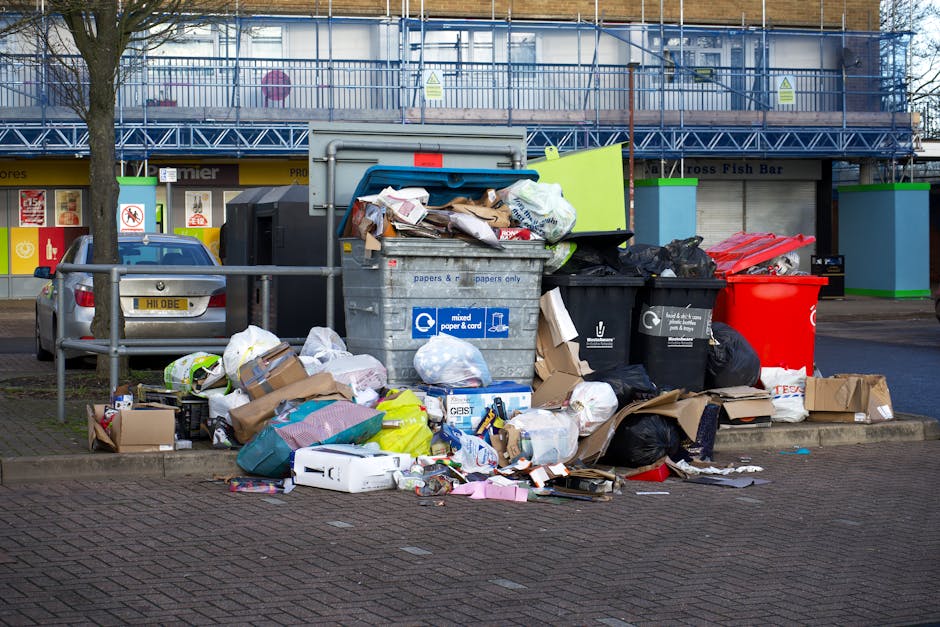
Sydenham Hill Station Rubbish Drop Off Access Tips: A Practical Guide for Safer, Smoother Disposal
If you are trying to work out the best way to manage a rubbish drop off near Sydenham Hill station, the real challenge is usually not the waste itself. It is the access. Narrow roads, awkward kerbs, timed journeys, tight pavements, and the simple question of where you can safely stop all make a difference. These Sydenham Hill station rubbish drop off access tips are written to help you plan the job properly, avoid stress, and keep things moving without turning a quick disposal run into a frustrating afternoon.
Whether you are clearing a flat, getting rid of a few bulky items, or organising a larger local waste collection, a bit of planning goes a long way. In our experience, the people who have the smoothest drop-offs are not the ones who rush. They are the ones who check access, think about timing, and prepare the load before they leave home. Sounds simple. It usually is, until you are standing with a sofa corner in one hand and nowhere to park.
This guide walks you through the practical side of rubbish drop off access around Sydenham Hill station: what to expect, how the process works, the most common mistakes, and the best way to prepare. You will also find a checklist, a comparison table, and answers to the questions people ask most often.
Table of Contents
- Why Sydenham Hill station rubbish drop off access tips Matters
- How Sydenham Hill station rubbish drop off access tips Works
- Key Benefits and Practical Advantages
- Who This Is For and When It Makes Sense
- Step-by-Step Guidance
- Expert Tips for Better Results
- Common Mistakes to Avoid
- Tools, Resources and Recommendations
- Law, Compliance, Standards, or Best Practice
- Options, Methods, or Comparison Table
- Case Study or Real-World Example
- Practical Checklist
- Conclusion
- Frequently Asked Questions
Why Sydenham Hill station rubbish drop off access tips Matters
Access is the bit that decides whether a waste drop-off is straightforward or miserable. Near a busy station, you are often dealing with a mix of pedestrians, station users, delivery vehicles, parked cars, and the usual London rhythm of people moving quickly and expecting the pavement to stay clear. If your rubbish drop off is badly planned, you may end up blocking space, taking too long, or having to carry items farther than you expected.
That matters for a few reasons. First, it affects safety. Heavy bags, broken furniture, and loose waste are harder to manage when you are juggling traffic, people, and narrow access. Second, it affects efficiency. If you misjudge the route, you can easily add fifteen or twenty minutes to what should have been a tidy visit. Third, it affects compliance and courtesy. Nobody wants to be the person causing a pinch point near a station entrance at the wrong time of day.
There is also a more practical point. The better your access plan, the easier it is to choose the right disposal method. A quick load from a flat might be best handled with a small vehicle and clear lift access, while a bigger job may be better suited to a full waste removal service. That is where pages like waste removal and flat clearance become relevant, because the right service depends on how accessible the property and loading point actually are.
To be fair, most access problems are predictable. The trick is noticing them before you are already there.
How Sydenham Hill station rubbish drop off access tips Works
The basic idea is simple: you identify the safest and easiest route to move rubbish from your property or vehicle to the drop-off point, then you remove friction before the day of the job. But the details matter. Access around a station area is usually affected by time of day, road width, foot traffic, and whether you can park close enough to load and unload without hassle.
A sensible access plan usually follows this pattern:
- Check the likely arrival and departure route, not just the destination.
- Work out where the vehicle can stop legally and safely.
- Estimate the carrying distance from the building or collection point.
- Decide whether items need to be bagged, wrapped, dismantled, or moved in stages.
- Choose the right time window to avoid the busiest pedestrian periods.
For many people, the biggest surprise is that the access question starts before the rubbish leaves the property. For example, a bulky wardrobe that will not fit through a hallway is not just a furniture problem; it is an access problem too. If dismantling is needed, you need tools, time, and somewhere to temporarily stage the pieces. If you are dealing with household items, you may want to look at furniture disposal or even furniture clearance for larger or awkward loads.
In practical terms, the process works best when you think in layers: street access, building access, handling access, and disposal access. Miss one layer and the whole thing becomes fiddly. That is the bit people often overlook. Not dramatic, but very real.
Key Benefits and Practical Advantages
Good access planning is not only about avoiding problems. It makes the whole job better. The main benefits are surprisingly tangible, and you will notice them quickly.
- Faster turnaround: Less time spent circling, repositioning, or carrying waste farther than needed.
- Safer handling: Fewer awkward lifts, fewer tight turns, and less risk of dropping items on steps or kerbs.
- Less disruption: Better timing and routing reduce the chance of interfering with station footfall or local traffic.
- Lower stress: A clear plan usually means fewer last-minute decisions, which is half the battle.
- Better value: When access is easy, waste collections and clearances tend to run more efficiently.
There is also a subtle benefit that people only realise after the fact: access planning often improves sorting. Once you start staging items near the exit, it becomes easier to separate recyclables, reusable furniture, and mixed waste. That is helpful if you care about responsible disposal, and it fits well with a broader approach to recycling and sustainability.
Expert summary: The best rubbish drop-off access is usually the one that looks boring. Short route, clear timing, simple handling, and no surprises. Boring is good here.
Who This Is For and When It Makes Sense
This kind of access planning is useful for a wide mix of people. Some are clearing a home after years of accumulated clutter. Others are just trying to get rid of an old sofa without upsetting neighbours or missing a train connection. It all fits under the same broad question: how do you get waste out efficiently around a busy local station area?
It makes sense if you are:
- moving furniture or bulky household items
- clearing a flat or maisonette with tight stair access
- managing post-refurbishment waste from a small property job
- handling garden waste bags that are easy to carry but awkward in bulk
- trying to clear a garage, loft, or spare room without multiple trips
- organising office or business waste outside normal quiet hours
If your job involves mixed waste, heavy lifting, or several stop-start trips, the access issue becomes even more important. Business owners, landlords, and managing agents often need a more structured solution. In those cases, business waste removal or office clearance may be a better fit than trying to improvise with a one-off car load.
And if you are doing something more comprehensive, such as emptying a whole property, a broader house clearance or home clearance can save a lot of back-and-forth. Honestly, it is often the repeated trips that wear people out.
Step-by-Step Guidance
Here is a practical way to approach rubbish drop off access near Sydenham Hill station without overcomplicating things.
1. Walk the route before you load anything
If possible, inspect the route in advance. Look at pavement width, steps, slopes, kerbs, turning space, and any obvious bottlenecks. A route that seems fine from a distance can be awkward once you are carrying a fridge shelf or a stack of bin bags. You want to see the actual human path, not just the map version.
2. Decide what stays together and what should be broken down
Items that can be dismantled safely are usually easier to move. Flat-pack furniture, bed frames, and shelving often benefit from being taken apart before collection. Keep screws and fittings in a labelled bag. It sounds fussy. It saves grief later.
3. Sort your waste before the day of the drop-off
Separate general waste, recyclable material, reusable items, and anything that requires special care. If you are disposing of bulky household items, think about whether some pieces could be donated, reused, or sent for specialist handling rather than mixed into a single load. When a job includes old sofas, tables, or cabinets, furniture disposal is often easier when the items are already grouped.
4. Choose the right time window
Timing around a station area really matters. Early mornings and peak commuter times can be more awkward than they first look. A short delay can turn into a long wait if pedestrian flow is heavy or the nearest stopping point is already occupied. Mid-morning or early afternoon often feels calmer, though local conditions vary. You will know pretty quickly when the area settles down.
5. Pack for easy unloading
Use sturdy sacks, tie loose items, and keep breakables wrapped. If you are using a vehicle, put the most difficult items nearest the door or tailgate. That saves lifting and shuffling on arrival. It is one of those tiny practical choices that makes a surprisingly big difference.
6. Keep the load legal and safe
Do not overload a vehicle, hide sharp objects under soft bags, or stack things in a way that makes unloading unsafe. If the waste is heavy or the access is tight, consider whether a professional team would be the simpler option. Some jobs are just not worth forcing.
7. Check what help you will need on site
If there are stairs, narrow doors, or no lift access, plan for the number of people required to move the items safely. A one-person job can quickly become a two-person job once you reach the hallway. If the item is too awkward, pause and rethink rather than trying to be heroic. Nobody wins a prize for wrestling a wardrobe through a 19th-century doorway.
Expert Tips for Better Results
The following tips come from the sort of small, practical details that make a local waste job run better. Nothing fancy. Just the things that save time and annoyance.
- Measure first, move later: Check the widest points on the route and compare them to the widest item, not the narrowest.
- Use one staging area: Gather everything in one place before loading. That reduces double handling.
- Protect corners and walls: If the route is tight, use blankets or cardboard to avoid scuffs.
- Keep one bag for loose screws and fittings: Tiny parts disappear at exactly the wrong moment.
- Leave a little buffer time: A 10-minute plan can become a 20-minute job very easily.
- Think in trips, not just volume: Two efficient trips beat one chaotic one almost every time.
One thing we often tell people: if you are unsure whether the job is really a small rubbish drop-off or something more involved, be honest about it early. A quick check can save a lot of backtracking. For example, if the job is mostly old office furniture, a tailored furniture clearance or even a full office clearance may be the neater answer.
And yes, a tidy plan does feel a bit more satisfying. There is something deeply calming about getting it right on the first attempt.
Common Mistakes to Avoid
Most access issues are avoidable, which is the annoying part. Here are the most common mistakes people make when they rush.
- Assuming the stop point will be obvious: It often is not, especially near busier station streets.
- Ignoring the last 20 metres: The final stretch, not the route on the map, usually causes the real headache.
- Leaving sorting until arrival: That creates delay and clutter.
- Forgetting about weather: Rain makes cardboard weak, steps slippery, and handling slower.
- Trying to move oversized items without dismantling them: This is where door frames and patience both suffer.
- Not checking whether the load needs specialist handling: Some waste streams are better dealt with separately.
A lot of the frustration comes from underestimating how ordinary life gets in the way. A delivery van appears. Someone parks too close. A bag splits. The kettle is still on back at home. Small things, but they stack up. That is why a little planning helps more than people expect.
Tools, Resources and Recommendations
You do not need a lot of kit for a well-planned rubbish drop-off, but a few sensible tools make the job much easier.
| Tool or resource | Why it helps | Best for |
|---|---|---|
| Strong sacks and boxes | Keep loose waste together and reduce spills | General rubbish, small mixed items |
| Gloves and sturdy footwear | Improves handling and reduces minor injuries | Any lifting job |
| Blankets or cardboard | Protects walls, doors, and furniture edges | Narrow access routes |
| Basic tools for dismantling | Helps reduce item size before moving | Furniture and flat-pack pieces |
| Labels or tape | Keeps parts, screws, and categories organised | Clearing jobs with mixed items |
For bigger domestic projects, it is often sensible to think beyond a basic drop-off. Services such as garage clearance, loft clearance, or garden clearance can be a better fit if the waste is bulky, awkward, or spread across different parts of the property.
If you are comparing options, also think about payment clarity and trust. A decent provider should be clear on how quotes are handled and what is included. That is where pages like pricing and quotes, payment and security, and insurance and safety can help reassure you before you book anything.
Law, Compliance, Standards, or Best Practice
When rubbish is being handled near a station or in a public-facing part of London, common-sense compliance matters. The safest approach is to avoid blocking footpaths, do not leave waste in an exposed place longer than needed, and make sure anything you move is secure in transit. That is not glamorous advice, but it is the right sort.
In the UK, households and businesses also have different responsibilities when disposing of waste. If you are disposing of business waste, keep it separate from domestic waste and use a suitable collection method. If you are using a clearance company, it is sensible to check they operate transparently, follow safety procedures, and handle waste responsibly. You do not need legal jargon for this. You just need a provider that acts properly.
Best practice also means being careful with items that may need special handling. Paint, chemicals, batteries, and electricals are not the sort of things to toss in with general rubbish without thinking it through. If in doubt, separate them and ask for guidance before collection. A small pause is better than a messy mistake.
For readers who want to be thorough, it is also worth reviewing a company's health and safety policy, complaints procedure, and accessibility statement. Those pages are not exciting, granted, but they tell you a lot about how seriously a business takes the practical side of the work.
Options, Methods, or Comparison Table
Different jobs call for different approaches. A small load near Sydenham Hill station may only need one vehicle and careful timing. A bigger clearance may benefit from a crew, a larger vehicle, and a more structured plan. Here is a straightforward comparison.
| Method | Best for | Pros | Watch out for |
|---|---|---|---|
| Self-managed drop-off | Small loads, simple access | Flexible, quick, low overhead | Parking, lifting, timing, physical effort |
| Partial assisted load | Medium jobs with some bulky items | Easier handling, less strain | Still needs planning and clear access |
| Full clearance service | Large, mixed, or awkward waste | Efficient, safer, less hassle | Usually depends on quote and access details |
If the waste is mainly from a domestic clear-out, it may be worth considering whether a full home clearance or house clearance is actually the easier route. People often start out thinking they need a simple drop-off and end up needing a much larger solution. That is normal, by the way.
Case Study or Real-World Example
Imagine a resident clearing out a first-floor flat a short walk from Sydenham Hill station. The load includes an old chest of drawers, two broken chairs, several bags of mixed household waste, and a small table that might survive a second life somewhere else. At first glance, it sounds simple enough.
But the details quickly matter. The stairs are narrow. The front entrance is shared. There is limited stopping space outside. The resident can only move things out in a short window between school-run traffic and the afternoon commuter flow. If they just start carrying items at random, the job becomes slow and awkward.
A better approach would be:
- move all waste to one room the night before
- dismantle the table and chairs if needed
- bag the loose waste securely
- pick a quieter time window
- keep the route inside the building clear
- decide in advance whether reusable furniture should be set aside
The result is much calmer. The load leaves faster, the hallway stays clear, and the resident does not have to keep pausing to sort things on the doorstep. Truth be told, that kind of calm is worth a lot.
Practical Checklist
Use this checklist before any rubbish drop-off or local clearance near Sydenham Hill station.
- Have I checked the access route from the property to the vehicle?
- Do I know where the vehicle will stop safely?
- Have I chosen a sensible time to avoid the busiest footfall?
- Are bulky items dismantled if needed?
- Are all bags closed and secure?
- Have I separated reusable, recyclable, and general waste?
- Do I have gloves, tape, tools, or blankets if required?
- Is the load within safe handling limits?
- Have I planned for stairs, lifts, kerbs, or narrow doorways?
- Do I need a fuller service instead of a simple drop-off?
If you can tick most of those boxes, you are already ahead of the curve. Not glamorous, but very effective.
Conclusion
Sydenham Hill station rubbish drop off access tips are really about one thing: making a small task feel manageable instead of messy. The better you think about route, timing, loading, and handling, the easier the whole job becomes. That is true whether you are moving a few bags, a couple of bulky items, or the contents of an entire room.
Plan the access, sort the waste early, and choose the right disposal method for the load in front of you. If the job looks bigger than expected, that is not a failure. It is just useful information, and it helps you choose a better next step. In the end, a smooth waste drop-off is often the result of small decisions made before you even leave the house.
If you are weighing up the most practical way to handle a bigger clear-out, you may also want to review about us and the wider service pages to see what fits your situation best. Different jobs need different solutions, and that is perfectly fine.
Get a free quote today and see how much you can save.
And if the day ends with one less pile of rubbish outside and one less thing on your mind, that is a good day, really.
Frequently Asked Questions
What are the most important Sydenham Hill station rubbish drop off access tips?
The main tips are to check the access route in advance, choose a quieter time window, keep the load well organised, and make sure you can stop or unload safely without blocking pedestrians or traffic.
Do I need to dismantle furniture before a rubbish drop off?
Not always, but it often helps. If an item is too wide for a doorway, awkward on stairs, or difficult to carry, dismantling it first usually makes the job safer and faster.
Is it better to do a small drop-off myself or book a clearance service?
That depends on the volume, weight, and access. Small, simple loads can be handled personally, but bulky or mixed waste is often easier with a professional clearance service.
What if parking near the station is limited?
If parking is tight, plan a drop-off window carefully and consider whether the load can be staged closer to the vehicle. If that still feels awkward, a service with a better loading plan may be the safer choice.
Can I mix furniture, bags of waste, and recyclable items together?
You can transport them together in some cases, but sorting them before the job is usually better. It saves time, helps with reuse or recycling, and makes the whole process less messy.
How do I know whether my rubbish is too much for one trip?
If the items are bulky, heavy, or likely to make the vehicle unsafe to load, it is probably more than a simple one-trip job. A quick reality check before you start is usually enough to tell.
What should I do with sharp or broken items?
Wrap them securely, label them if helpful, and keep them separate from softer waste. Safety comes first with broken glass, metal edges, or similar hazards.
Are there best times of day to manage access near Sydenham Hill station?
Quieter periods are usually better than commuter peaks. Mid-morning or early afternoon can be easier, but local conditions vary, so it is worth checking the area before committing.
What if I have stairs, no lift, or a narrow hallway?
That is exactly when planning matters most. Measure the route, reduce item size where possible, and decide early whether you need extra help or a fuller clearance solution.
Should I worry about compliance when dropping rubbish off locally?
Yes, in the sense that waste should be handled safely, legally, and without obstructing public access. For business waste in particular, use a suitable collection method and keep it separate from domestic rubbish.
How do I choose between home clearance and house clearance?
They are both useful for larger domestic jobs, but the right choice depends on what is being removed and how much access support you need. A smaller property-based job may suit home clearance, while a fuller property emptying may suit house clearance.
Where should I start if I am not sure what service I need?
Start by listing what you have, how much there is, and what the access is like. Then compare that against the kind of clearance or removal service that best matches the job. If you are still unsure, it is worth checking the relevant service information and taking it from there.